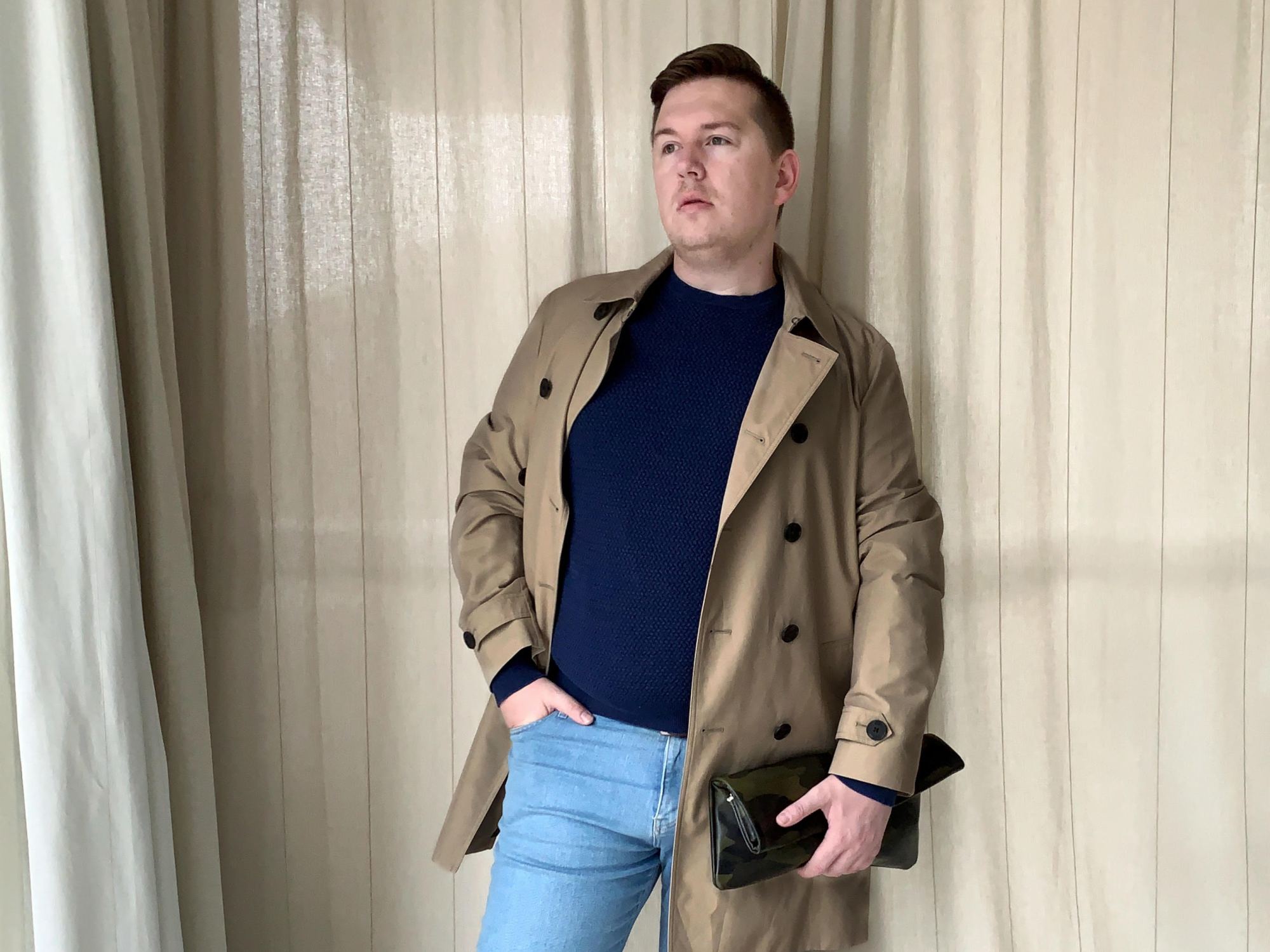
My friends at 2CE Talking Canberra invited me to talk to them about military influences in the world of fashion in the lead up to ANZAC Day, and I did the best that I could to distil literally centuries of fashion history and military influence into a five-minute segment!
So, without further delay, here’s a reproduction of at we discussed.
When did we first start seeing the military influence fashion?
We’ve seen military influence in fashion throughout history in a number of different ways. The factor that ties all the different interpretations together is that they usually come-about after a war, with military personnel returning from service to every-day life.
Historically returning soldiers have worn garments like trench coats or bomber jackets, or sometimes parts of their camouflage uniform; in their everyday wardrobe – and this is how military style enters the mainstream consciousness where fashion picks it up and reinterprets it.
The trench coat is arguably the oldest and the best-known example. A light-weight alternative to bulky wool coats originally worn by army officers, the trench coat was introduced in WW1 and there’s two fashion houses with claims to its invention – Aquascutum and Burberry.
What people might not know however, is one of the reasons soldiers wore their coats after war is because they had to purchase them themselves! They were an optional item of dress, an add-on to their uniforms and they were not cheap.
Does military look every go out of fashion?
Nothing ever really goes out of fashion – fashion is cyclical and styles and garments come and go over time. So, that is a very loaded question and something designers like to play havoc with all the time.
The trench coat seems to enjoy an unending popular appeal and is rarely not available, where the bomber jacket seems to cycle through designers’ collections much less regularly (but it is in fashion at the moment). Bomber jackets were originally called Flight Jackets and were introduced to the American Military as a response to planes being able to climb higher and it being colder in the cockpit. We’re seeing a lot of them at the moment in really bold (some would say gaudy) prints.
Wearable camouflage didn’t leave the war zone and infiltrate pop culture until the second half of the twentieth century, with Andy Warhol often credited with pushing camouflage into everyday fashion with his colourful interpretations. Now camouflage is something that is always available, but certainly not always fashionable. Just look at America where it has become an institution of its own, but usually associated with a lack of fashion sense.
Where can we see that influence in today’s styles?
Well aside from trench coats, bomber jackets and camouflage – there are a lot of smaller and subtler nods to military influence, especially in the cuts of certain garments, or their decoration. Tactical garments get reimagined for sport or hiking, like cargo pants and aviator sunglasses. Certain hat shapes are derived from military style, and often stylists will have a hand in bringing military influence back for photoshoots or ad campaigns.
We’ve seen style icon the Duchess of Cambridge Kate wear some military inspired coats to such events such as the Remembrance Sunday service. Is it ever inappropriate to wear military inspired clothing? There are certainly limits to how you should wear military inspired fashion, and ANZAC Day and Remembrance Day are a perfect reminder of this. Trench coats and bombers aside, some elements of military dress should never be copied or emulated, like military medals. These are honours bestowed upon our service men and women, and it is really disrespectful for civilians to wear them, with the rare exception of military parade or ceremony like Anzac Day where you might wear those to commemorate someone in your family who has served.
 Grant Heino